

 English
 русский
 عربى
In biotechnology and vaccine production, the slightest microbial contamination can lead to catastrophic batch failure. Our GMP Standard Buffer Tank solves this through a dead-leg-free, self-draining d...
READ MORE
Wine Fermenting: Control Temperature, Yeast, and Tanks for Consistent Results
Content
- 1 Wine Fermenting Fundamentals: Sugar, Yeast, and Time
- 2 Temperature Control During Wine Fermenting
- 3 Yeast Selection and Nutrition for Reliable Wine Fermenting
- 4 Red Versus White Wine Fermenting: Process Differences
- 5 Equipment Choices That Shape Wine Fermenting Outcomes
- 6 Sanitation and CIP in Wine Fermenting
- 7 Scaling Wine Fermenting from Trial Batch to Commercial Volume
When a 5,000-liter tank of Pinot Noir must goes from 22°C to 29°C in six hours, you have a choice: intervene or accept whatever volatile acidity and cooked fruit character follow. Wine fermenting is not a passive waiting game; it is a controlled biological process with a narrow window for quality decisions. The four variables that determine success are yeast health, temperature, oxygen management, and sanitation. Everything else—tank shape, pump-over schedule, yeast nutrient brand—is a tool for managing those four.
This guide gives you the conclusions first, then the reasons. If you are planning a commercial wine fermentation or troubleshooting a stuck batch, the sections below focus on what changes outcomes at production scale.
Wine Fermenting Fundamentals: Sugar, Yeast, and Time
Alcoholic fermentation converts one molecule of glucose into two molecules of ethanol and two of carbon dioxide. In wine must, the practical window for dry fermentation is 7 to 21 days, depending on temperature, yeast strain, and starting sugar. A must at 24°Brix with a robust yeast at 24°C may finish in 7 days; the same must at 16°C may take 18 days and retain more floral esters.
Three numbers matter at the start:
- Starting Brix or sugar: 21–25°Brix is typical for dry reds and whites. Above 26°Brix, osmotic stress slows yeast.
- Yeast inoculation rate: 20–30 g/hL of active dry yeast is standard. Under-pitching invites wild yeast and sluggish starts.
- Yeast assimilable nitrogen (YAN): 150–250 mg/L for most fermentations. Below 140 mg/L, stuck fermentation risk rises sharply.
If you measure only one thing before pitching, measure YAN and temperature. They predict more fermentation problems than tank geometry ever will.
Temperature Control During Wine Fermenting
Temperature is the strongest lever you have over fermentation speed and aroma. Red wines typically ferment at 20–32°C, while whites and rosés prefer 12–22°C. Exceed the upper range and you strip volatile aromas, accelerate volatile acidity production, and risk a run-away fermentation that finishes before you can extract the tannin you want.
| Wine style | Typical fermenting temperature | Primary risk if exceeded | Aroma outcome |
|---|---|---|---|
| Red (Cabernet, Syrah) | 24–30°C | Volatile acidity, cooked fruit | Fuller body, lower fresh fruit |
| Red (Pinot Noir) | 20–26°C | Loss of delicate esters | Preserved red fruit and spice |
| White (Chardonnay, Sauvignon) | 14–20°C | Stalled fermentation if too cold | Higher thiols and floral notes |
| Rosé | 12–18°C | Sluggish yeast, reduction | Crisp fruit, low phenolics |
Jacketed tanks with glycol cooling give you the control to hold a setpoint within ±1°C. Without jackets, you are at the mercy of ambient temperature and must rely on cold soaks, night harvesting, or accepting a faster, hotter ferment. For commercial volumes, temperature control is not optional; it is the difference between repeatable style and vintage variation.
Yeast Selection and Nutrition for Reliable Wine Fermenting
Commercial yeast strains are selected for competitive factor, alcohol tolerance, and aroma profile. Wild or native fermentations can produce complexity, but they also introduce unpredictability: native fermentations are 3 to 5 times more likely to stall if YAN and temperature are not managed closely. For production reliability, most wineries pitch a known strain and add nutrients in two stages: at inoculation and at one-third sugar depletion.
Yeast propagation is the step that turns a small culture into a pitching volume large enough for a 10,000-liter tank. Doing it in-house with a dedicated propagation plant reduces dependence on dried yeast supply and gives you a consistent, active culture at the exact moment you need it.
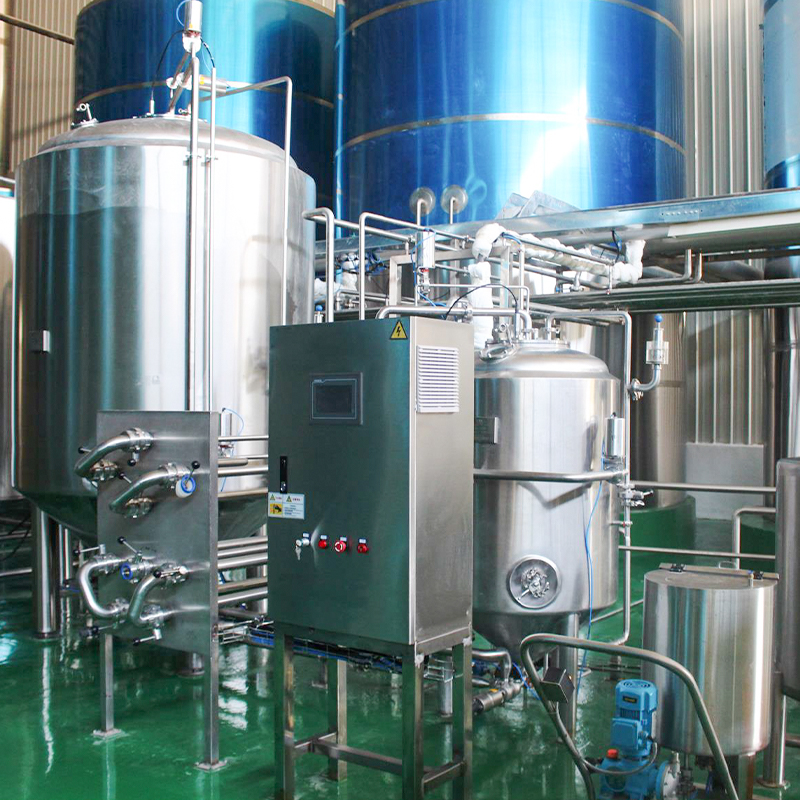 Automated Yeast Propagation PlantLarge-scale industrial brewing requires a constant, high-volume supply of pure yeast cultures, which manual systems cannot reliably provide. Our Automated Yeast Propag...View Product →
If you prefer dried yeast, rehydrate in 10 times its weight of 35–38°C water with 50 g/hL of sugar. Do not add nutrients directly to the rehydration water—it can stress the yeast before it has rebuilt its membrane.
Red Versus White Wine Fermenting: Process Differences
Red wine fermenting includes skin contact. The cap of skins and solids must be kept wet to avoid acetification and to extract color and tannin. Pump-over or punch-down frequency determines extraction: two pump-overs per day at peak fermentation is typical for a Bordeaux-style red, while a delicate Pinot Noir may get one gentle punch-down per day. White wine fermenting, by contrast, usually starts after pressing and settling, with no skin contact. The goal is protection: low temperature, minimal oxygen, and clean juice.
| Variable | Red wine fermenting | White wine fermenting |
|---|---|---|
| Skin contact | Yes, throughout primary fermentation | No, juice is pressed and settled |
| Cap management | Pump-over or punch-down 1–3 times daily | Not applicable |
| Temperature | 20–32°C | 12–22°C |
| Malolactic fermentation | Common for reds | Optional, style-dependent |
| Oxygen exposure | Moderate during pump-overs | Minimized to protect aromatics |
For reds, a tank with automatic pumping-over reduces labor and improves consistency. It also lets you schedule extraction cycles at night without a crew on site.
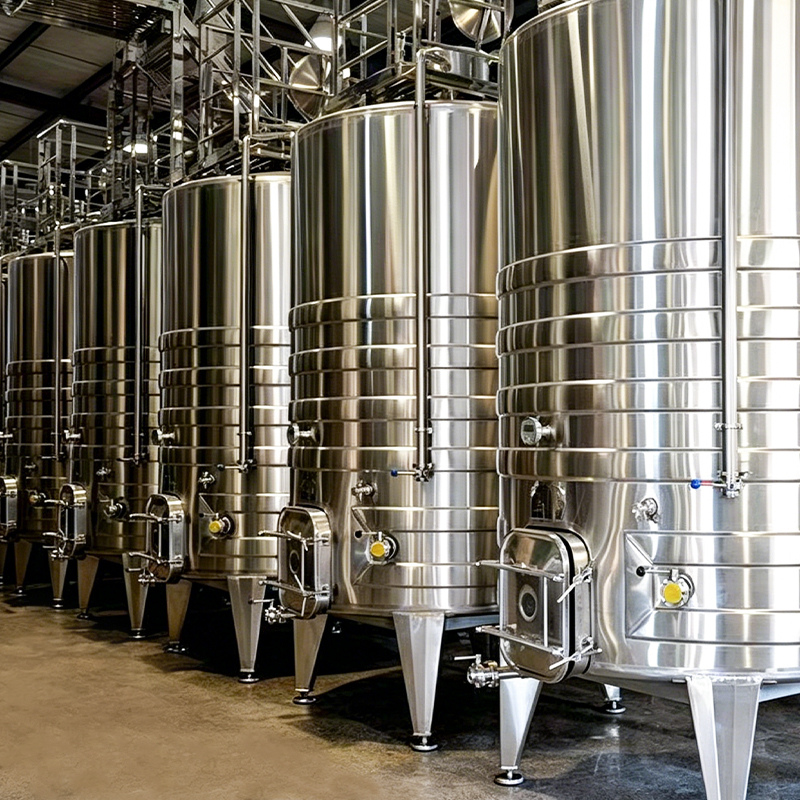 Red Wine Fermentation Vessel with Automatic Pumping OverExtracting optimal color and tannins from red wine skins traditionally requires labor-intensive manual "punching down." Our Red Wine Fermentation Vessel automates this...View Product →
Equipment Choices That Shape Wine Fermenting Outcomes
Tank material, shape, and jacket design directly affect fermentation kinetics. 304 stainless steel is acceptable for most wine contact, but 316L is preferred for high-acid or high-chloride musts. A conical bottom helps collect lees and reduces racking losses. Dimple or channel jackets provide cooling surface; a tank with insufficient cooling area will struggle to hold 18°C during a 28°C summer day.
Variable-capacity tanks are useful when you process multiple grape varieties or small lots. An adjustable inner wall or removable panel lets you change working volume without buying a second tank. That flexibility matters when a vintage yields 15% more fruit than expected or when you want to trial a new yeast on a small batch.
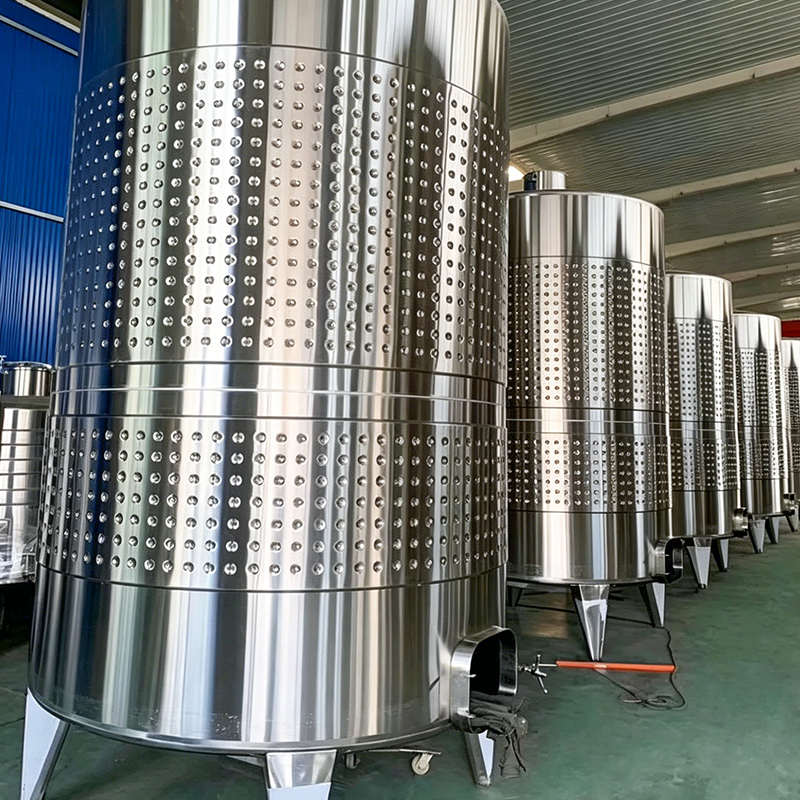 Variable Capacity Wine Fermentation TankSmall-batch wineries often struggle with oxidation when harvest yields or fermentation volumes don't perfectly match tank capacity. Our Variable Capacity Wine Fermenta...View Product →
Other features to specify: a side manway for easy cleaning, a racking arm at the lowest point, a sample valve at mid-height, and a CIP spray ball. Each adds cost, but each also reduces labor and oxygen pickup during transfers.
Sanitation and CIP in Wine Fermenting
After fermentation, tanks must be cleaned before the next batch. Wine stone, tartrate deposits, and yeast films create microbial harborage that can spoil subsequent fermentations. A validated CIP cycle typically uses 1–2% caustic at 70–80°C for 15–20 minutes, followed by an acid rinse and a final potable water rinse. For small wineries, a manual or semi-automatic CIP cart works; for larger cellars, an automated skid with data logging provides repeatability and verification.
If you are unsure whether your current tank design supports effective cleaning, review the basics of fermentation tank geometry and drainage. This guide on fermentation tank function covers the internal features that make CIP practical.
Never use the same cleaning equipment for juice lines and wastewater lines. Cross-contamination is a common source of Brettanomyces and acetic acid bacteria in commercial cellars.
Scaling Wine Fermenting from Trial Batch to Commercial Volume
Pilot fermentations in 100-liter tanks rarely predict 20,000-liter performance. Heat generation scales with volume, but cooling surface scales with area. A 10,000-liter fermenting must can generate enough heat to raise temperature by 5°C per day if cooling fails. That is why commercial projects need a heat-load calculation before tank selection, not after.
Turnkey fermentation lines combine crush, press, must chilling, fermentation tanks, pump-over systems, and CIP into a coordinated process. The goal is to remove manual decisions that vary between operators. Automation does not replace winemaking judgment; it executes your chosen protocol the same way every time.
If you are planning a new wine fermentation facility or expanding an existing cellar, talk to an equipment supplier early. Request a process review and tank sizing quote with your expected Brix, volume, and style targets. The right tank specification prevents expensive retrofits later.
Wine fermenting rewards preparation more than intervention. Measure YAN and temperature before pitching. Choose a yeast strain that matches your style and alcohol target. Hold the fermentation within its temperature window. Clean the tank as if the next vintage depends on it—because it does. The wineries that produce consistent wine are not the ones with the most expensive tanks; they are the ones that control the four variables and design their equipment around that control.
News
-
-
In advanced chemical synthesis, even a 2°C deviation from the target temperature can lead to batch failure. Our High-Precision Jacketed Agitator Tank is engineered for critical processes requiring mic...
READ MORE -
Every day of delayed production is lost revenue during a new business launch. Our "Plug-and-Play" Stainless Steel Brewing Skid is fully assembled, passivated, and factory-tested before shipping. Once ...
READ MORE -
Achieving a 6-to-12 month shelf life for dairy products at room temperature requires precise UHT treatment (137°C–142°C) followed by rapid cooling to maintain flavor. Our UHT Tubular Sterilizer uses a...
READ MORE -
Temperature-sensitive chemicals can degrade or react prematurely if not held under strict thermal conditions. Our Thermal Control Jacketed Storage Vessel is the ultimate solution for maintaining preci...
READ MORE -
For high-end personal care products, microbial growth in crevices and uneven surfactant distribution are critical quality risks. This Sanitary Single Wall Agitated Tank features a fully radiused inter...
READ MORE
YME Equipment
-
Quick Links
Home Products About Solution Service News Contact -
Products Category
Mixing Tanks Storage Tanks Fermentation Tanks Brewing Equipment CIP Cleaning Systems Pasteurizers Beverage & Dairy Turnkey Solutions
-
-
Welcome To Visit Us
No. 15 Yinghua Road, Chengdong Industrial Park, Daxu Town, Xiangshan County, Ningbo City, Zhejiang Province, China -
Call Us
• Mob: +86 0574 6583 9268 -
Contact Us Online
• info@ymeequipment.com
Copyright © YME Equipment Co., Ltd. All Rights Reserved.
OEM/ODM Fluid Process Equipment Manufacturer
Brewery Equipment Supplier
