What Are Horizontal Storage Tanks Used For?
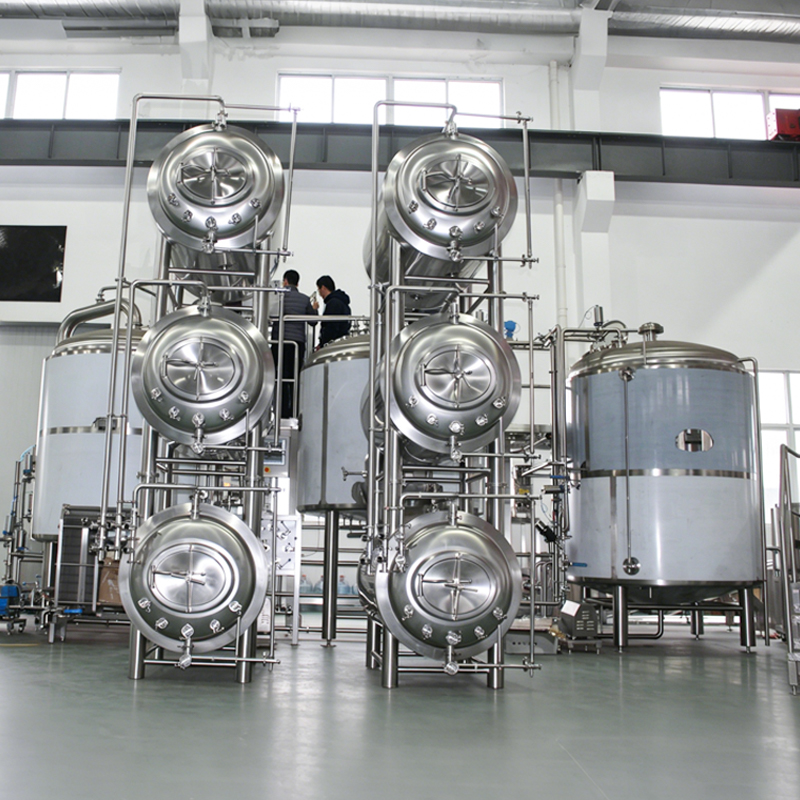
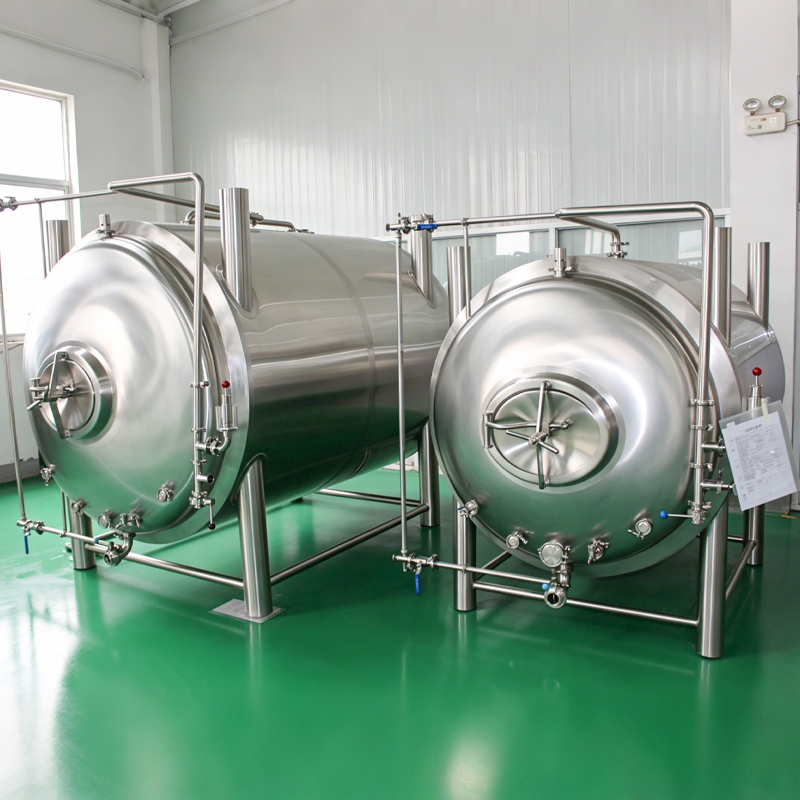
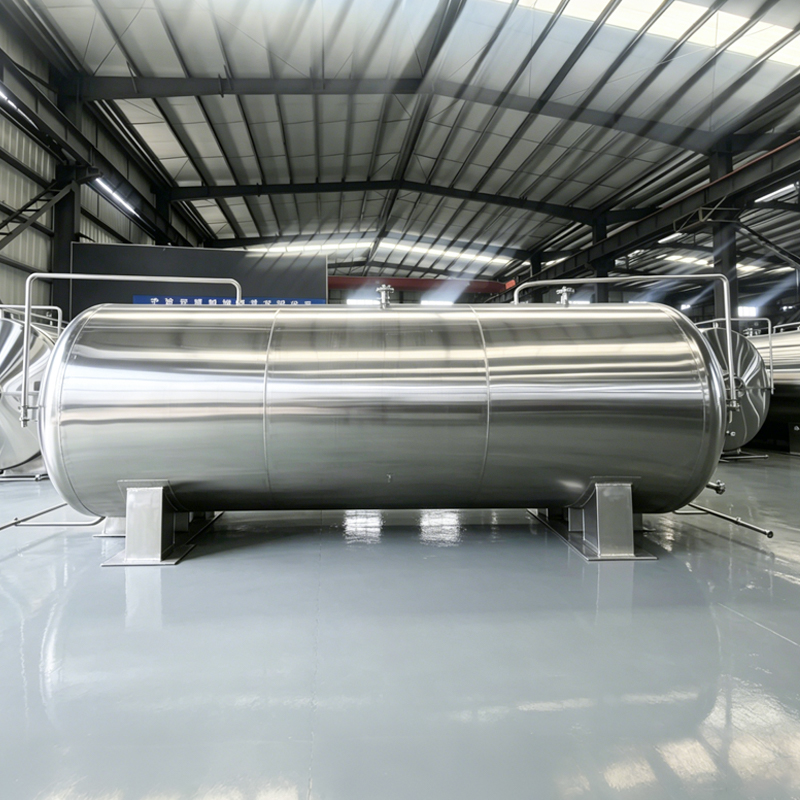
Horizontal Storage Tanks are cylindrical vessels installed on saddle supports with the tank body lying on its side rather than standing upright. This orientation lowers the tank's overall height and center of gravity, making it a practical choice for facilities with limited ceiling clearance, outdoor installations, or mobile/skid-mounted processing lines. They are commonly used to hold water, juice, beer, wine, and other liquid products that require temporary or intermediate storage between processing stages.
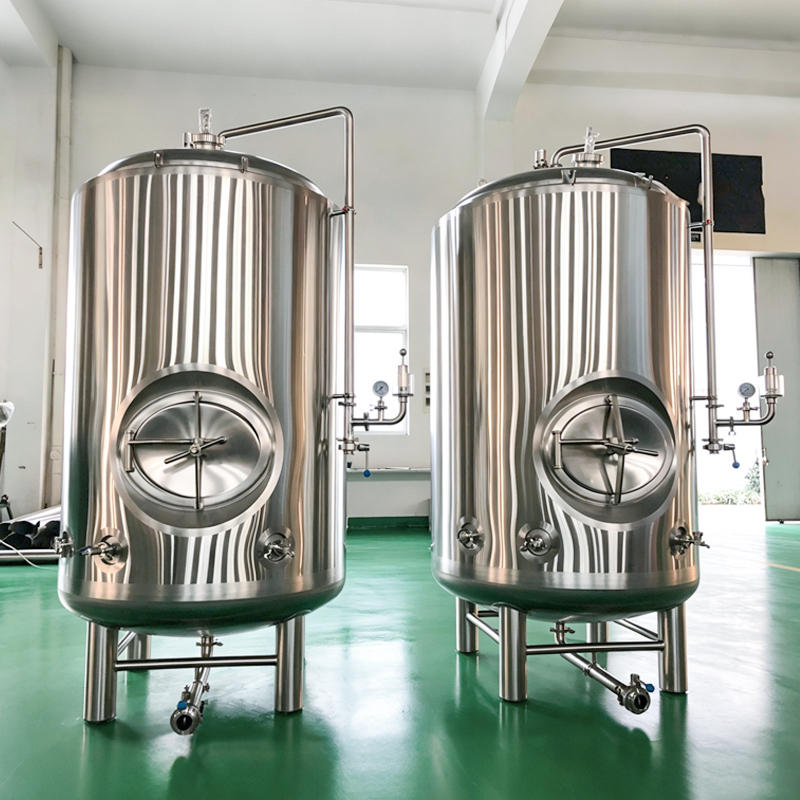
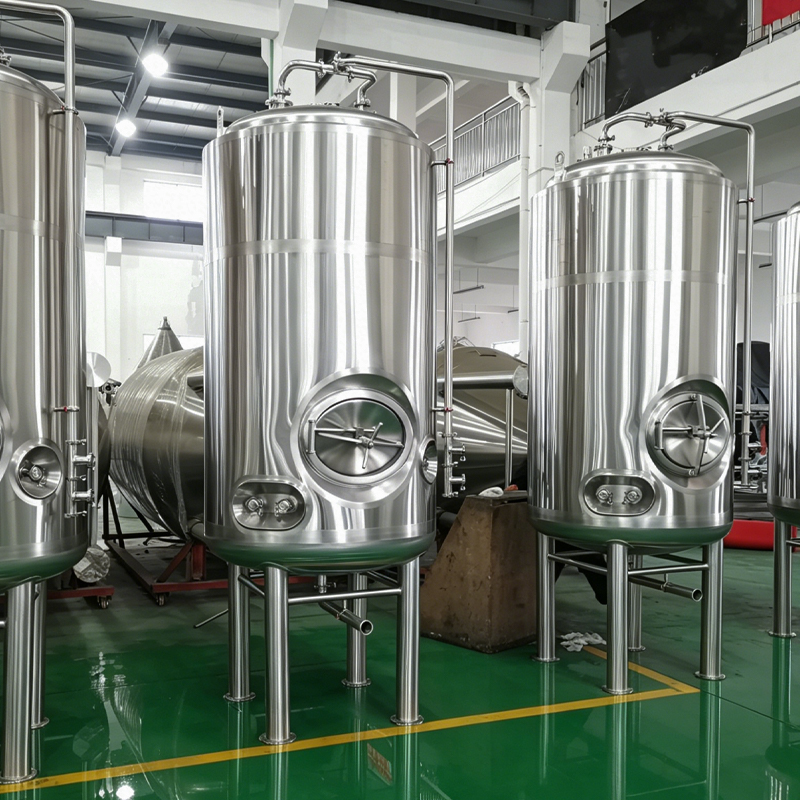
By comparison, Vertical Liquid Storage Tanks stand upright on a flat base or support legs, offering a smaller footprint for facilities where floor space is limited but ceiling height is available. Choosing between the two orientations largely depends on plant layout, tank capacity, and how the tank connects to upstream and downstream equipment.
Key Advantages of Horizontal and Vertical Tank Designs
Each tank orientation brings distinct operational benefits depending on the plant's spatial and process requirements.
- Low profile and stability — horizontal tanks sit closer to the ground, reducing tipping risk and simplifying transport for mobile or skid-based systems
- Easier top access for manual inspection or manway cleaning on low-height horizontal designs
- Smaller floor footprint with vertical tanks, freeing up valuable production floor area
- More efficient gravity-assisted draining in vertical tanks due to the conical or sloped bottom design
- Simplified agitator and CIP spray-ball placement in vertical vessels, since flow patterns are more predictable
How These Storage Tanks Work
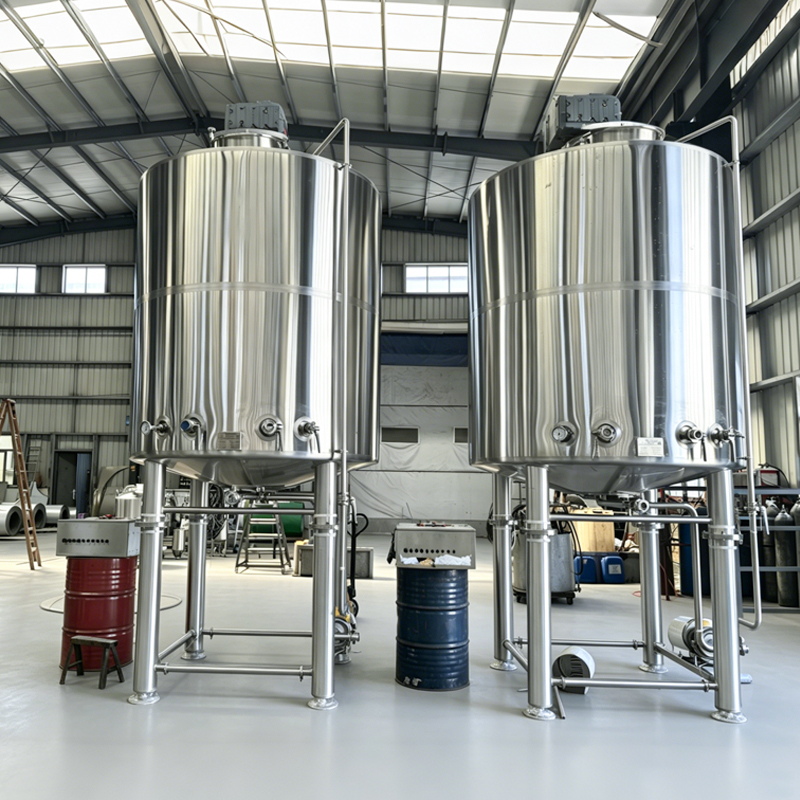
Both tank types function as sealed or vented holding vessels that receive product through an inlet valve, hold it under controlled temperature and pressure conditions, and release it through an outlet connected to downstream processing or filling equipment. Jacketed versions circulate glycol or hot water through an outer shell to maintain product temperature, while insulated models reduce heat loss during extended storage.
In a horizontal storage tank, product settles along the length of the cylindrical body, and the tank is typically fitted with a side-mounted outlet near the bottom curve to ensure near-complete drainage. In a vertical liquid storage tank, gravity naturally pulls product toward a center-bottom outlet, which is why vertical designs are often preferred when sediment or particulate settling needs to be managed efficiently.
Common Structural Features
Standard features across both orientations include a manway for internal access, sight glasses or level sensors for monitoring fill volume, CIP spray balls for automated cleaning, and pressure relief or vacuum breaker valves to protect the tank shell during filling and emptying cycles.
Horizontal vs. Vertical Tanks: Which One Fits Your Layout?
The table below summarizes the practical differences that typically guide a tank orientation decision.
General comparison between horizontal and vertical liquid storage tank designs
| Factor |
Horizontal Storage Tanks |
Vertical Liquid Storage Tanks |
| Floor footprint |
Larger footprint, low height |
Smaller footprint, taller profile |
| Best suited ceiling height |
Low-ceiling or outdoor sites |
Facilities with adequate vertical clearance |
| Mobility |
Easier to transport on skids or trailers |
Generally fixed installation |
| Drainage of sediments |
Moderate, side-outlet dependent |
Efficient, gravity-fed center outlet |
Typical Applications Across Industries
Horizontal storage tanks are frequently chosen for outdoor water storage, mobile brewing or beverage units, and facilities retrofitting equipment into buildings with restricted headroom. Vertical liquid storage tanks are the standard choice for brewery fermentation support, dairy processing, and juice or beverage plants where floor space is at a premium but overhead clearance allows for taller installations.
As a China-based OEM/ODM manufacturer of fluid process and brewery equipment with over 20 years of industry experience, YME Equipment Co., Ltd designs and manufactures both horizontal storage tanks and vertical liquid storage tanks tailored to a wide range of plant layouts and production scales. YME's engineering and production teams undergo ongoing technical training to keep pace with hygienic design standards, and the company's stainless steel equipment has been exported to customers across Europe, North America, Australia, and Asia, supported by lasting partnerships built on consistent product quality and tailored engineering solutions.
Frequently Asked Questions
Q1: Which tank orientation is better for outdoor installation?
Horizontal storage tanks are generally preferred outdoors because their low profile improves wind stability and reduces the need for tall support structures.
Q2: Can vertical liquid storage tanks be fitted with an agitator?
Yes, vertical tanks commonly accommodate top-mounted or side-entry agitators, which is one reason they are favored for products requiring blending or particulate suspension.
Q3: Are horizontal tanks harder to clean than vertical tanks?
Not necessarily; horizontal tanks use side or top-mounted CIP spray balls positioned along the cylindrical body, and with correctly sloped internals they achieve cleaning performance comparable to vertical designs.
Q4: What capacity range is typically available for these storage tanks?
Both horizontal and vertical liquid storage tanks are commonly manufactured from a few hundred liters for pilot-scale use up to tens of thousands of liters for large commercial production lines.



 English
 русский
 عربى
عربى