What Are Insulated & Jacketed Storage Tanks?
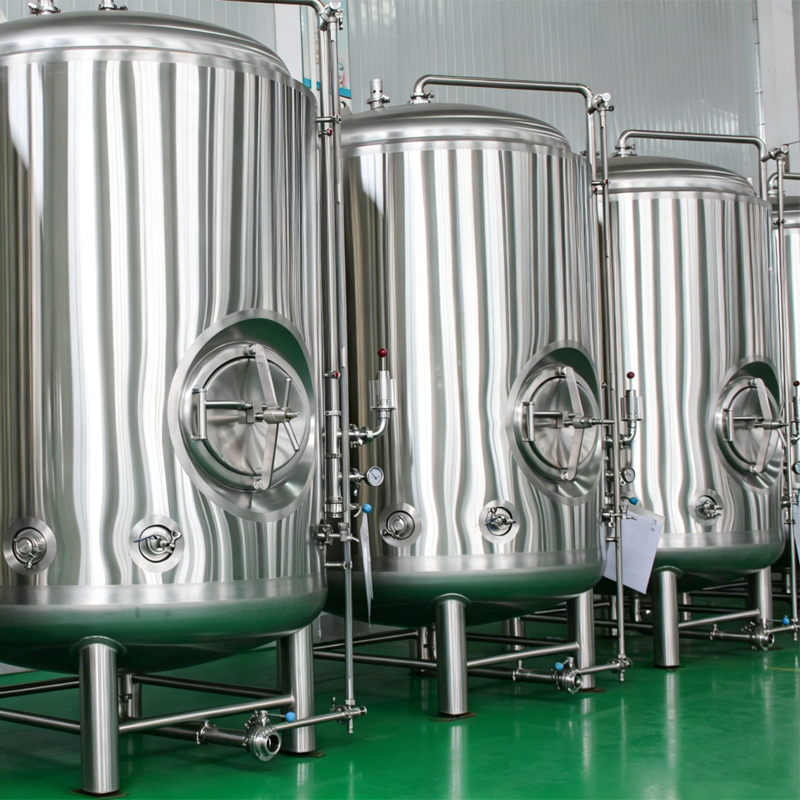
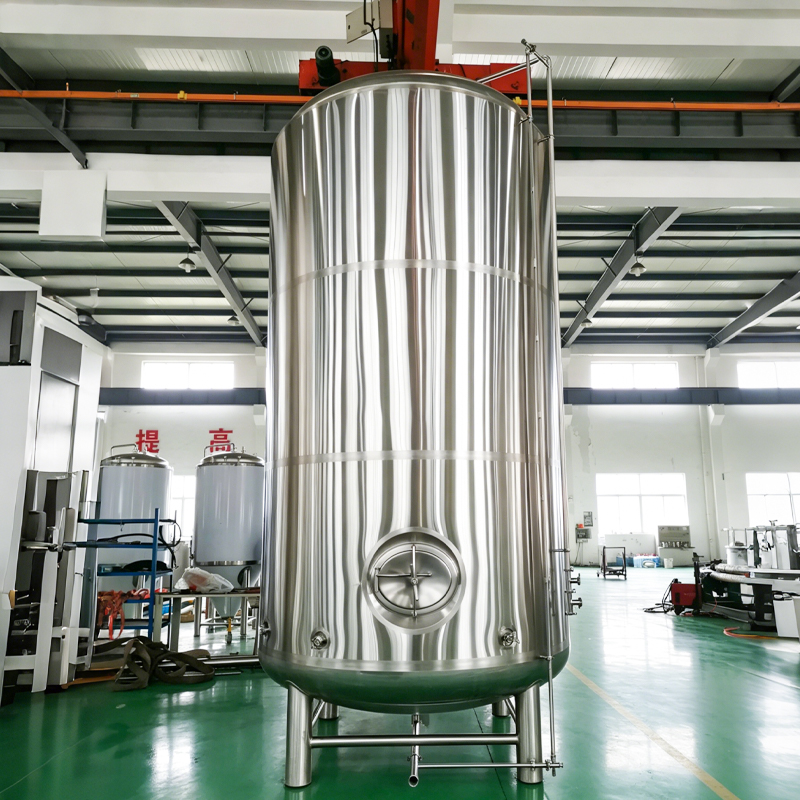
Insulated & Jacketed Storage Tanks are stainless steel vessels built with an outer shell layer that either wraps insulation around the tank body, circulates a heating or cooling medium through a jacket, or combines both, in order to keep stored liquid within a precise temperature range. They are widely used across breweries, dairies, and beverage plants where product quality depends on stable holding temperatures, whether that means keeping beer cold before packaging or preventing heat loss from a hot-filled product during transfer.
The distinction between the two terms matters: insulation alone slows heat transfer passively, while a jacket actively adds or removes heat by circulating glycol, hot water, or steam through channels welded to the tank's outer wall.
Adding thermal control to a storage tank delivers measurable process and quality benefits.
- Stable product temperature — glycol-jacketed tanks can typically hold product within a narrow ±1°C to ±2°C range during extended storage
- Reduced energy consumption compared to cooling or heating an entire room to control a single tank's temperature
- Protection against condensation-related corrosion, since insulation cladding keeps the outer shell dry
- Faster temperature recovery after CIP cleaning cycles, minimizing downtime between production batches
- Flexibility to combine heating and cooling zones on the same tank for processes that require both functions at different stages
How Insulated & Jacketed Storage Tanks Work
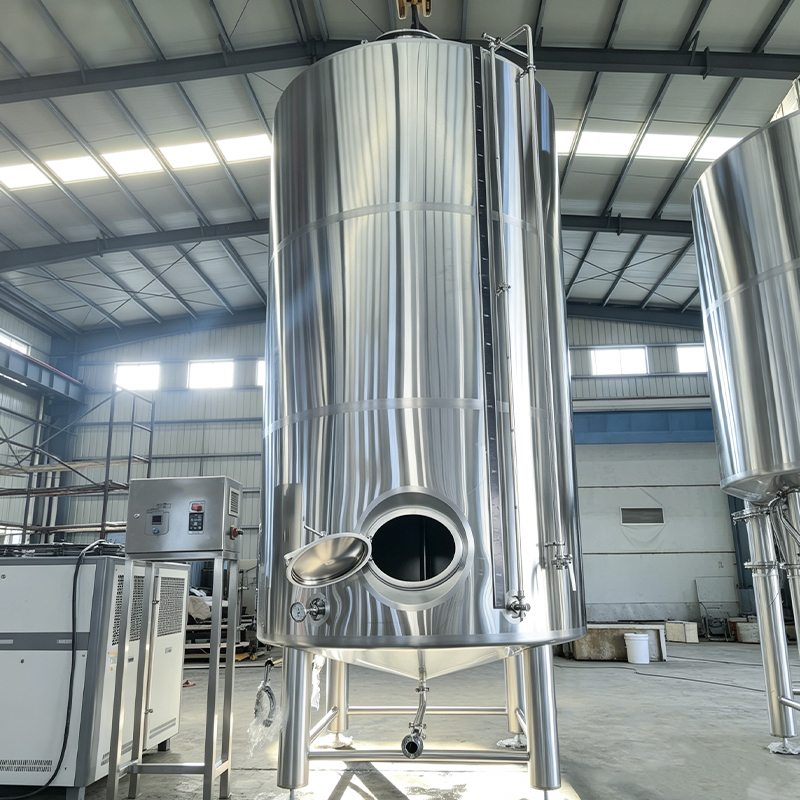
A jacketed tank consists of an inner product-contact shell and an outer jacket shell, with a gap between them through which a heating or cooling medium circulates. As glycol, hot water, or steam flows through this gap, heat is transferred through the inner shell wall to warm or cool the product inside, while a PLC-controlled valve system regulates flow rate to maintain the target temperature.
Insulation is typically applied on top of the jacket, using polyurethane foam or mineral wool sandwiched between the jacket surface and an outer stainless steel or aluminum cladding. This layer reduces heat loss by limiting conductive and convective transfer to the surrounding air, which is especially important for tanks holding product for hours or days rather than minutes.
Common Jacket Types
Dimple jackets use a pattern of small welded depressions to create turbulent flow and even heat distribution with less metal and welding than a full conventional jacket. Conventional (full) jackets use a smooth outer shell offset from the inner wall, offering higher flow capacity but at a greater material cost. Half-pipe coil jackets wrap a curved channel around the tank exterior, commonly used for higher-pressure heating applications.
Comparing Jacket Types for Different Applications
Selecting the right jacket type depends on the temperature range required, the pressure of the heating or cooling medium, and the tank's overall budget. The table below outlines general characteristics of the most common options.
General comparison of common jacket types used on insulated and jacketed storage tanks
| Jacket Type |
Typical Use |
Relative Cost |
| Dimple jacket |
General glycol cooling, even distribution |
Moderate |
| Conventional full jacket |
High-flow heating or cooling needs |
Higher |
| Half-pipe coil jacket |
Higher-pressure steam or thermal fluid |
Higher |
| Insulation only (no jacket) |
Passive heat retention, no active control |
Lower |
Industry Applications and Manufacturing Expertise
Insulated and jacketed storage tanks are essential wherever product quality depends on temperature stability, including cold beer bright tank storage, dairy holding before pasteurization, and hot-fill juice or sauce storage prior to packaging. They are also used in fermentation-adjacent storage where residual heat from an upstream process needs to be gradually brought down to a target holding temperature.
As a China-based OEM/ODM manufacturer of fluid process and brewery equipment with over 20 years of industry experience, YME Equipment Co., Ltd designs and manufactures insulated and jacketed storage tanks as part of complete brewhouse, fermentation, and CIP system solutions. YME's designers, engineers, and production staff continuously undergo advanced training to stay current with thermal design standards, allowing the company to tailor jacket configurations to projects of varying size and complexity. YME's stainless steel equipment has been exported to customers across Europe, North America, Australia, and Asia, supported by long-term partnerships built on consistent product quality and precise, tailored engineering.
Frequently Asked Questions
Q1: What is the difference between an insulated tank and a jacketed tank?
An insulated tank only slows heat transfer passively using foam or mineral wool, while a jacketed tank actively adds or removes heat by circulating glycol, hot water, or steam through a welded outer channel.
Q2: Can a single tank have both insulation and a jacket?
Yes, this is the most common configuration, where the jacket provides active temperature control and an outer insulation layer minimizes energy loss to the surrounding environment.
Q3: How much temperature variation can a glycol-jacketed tank maintain?
Well-designed glycol-jacketed tanks can typically hold product within a ±1°C to ±2°C range, though exact performance depends on jacket coverage, insulation thickness, and ambient conditions.
Q4: Is a dimple jacket or a full jacket better for beer storage?
Dimple jackets are commonly used for beer bright tank cooling because they provide even glycol distribution at a lower material cost than a full conventional jacket, which is typically reserved for higher-flow applications.



 English
 русский
 عربى
عربى