What Is Yeast Propagation & Storage Equipment?
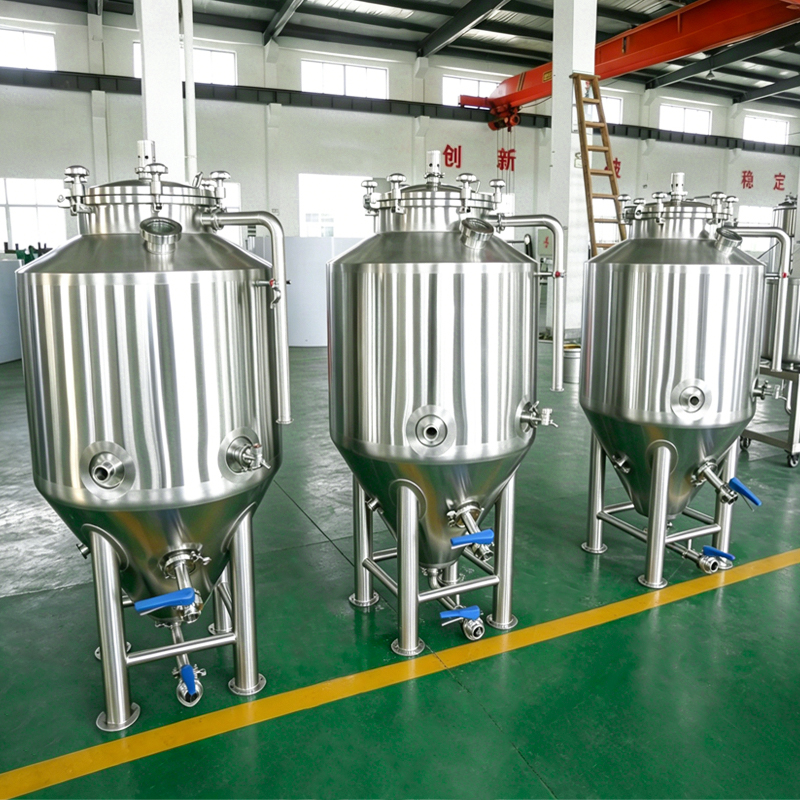
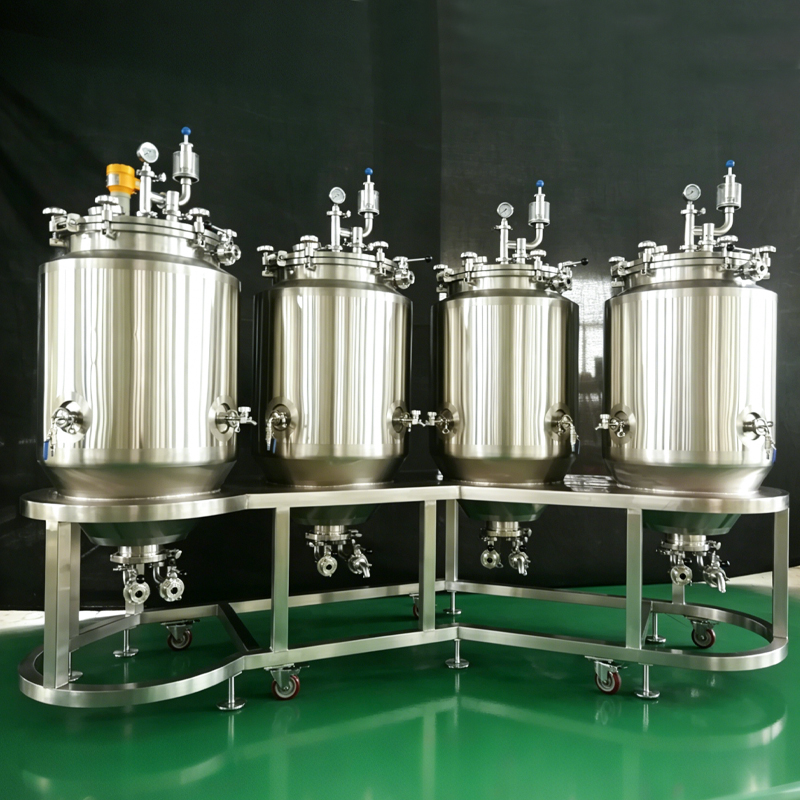
Yeast Propagation & Storage tanks are dedicated stainless steel vessels used to grow a healthy, active yeast population before pitching and to hold harvested yeast between batches under conditions that preserve its viability. These two functions — propagation and storage — are closely linked but serve different purposes: propagation builds up cell count and vitality ahead of fermentation, while storage keeps already-harvested yeast in a stable, low-activity state until it's needed again.
Breweries and other fermented beverage producers rely on this equipment to reduce dependence on purchasing fresh yeast for every batch, instead reusing and building up healthy yeast generations in-house.
Key Advantages of Dedicated Yeast Propagation & Storage Tanks
Investing in purpose-built yeast handling equipment delivers several practical benefits over improvised or shared-use vessels.
- Higher yeast viability at pitching — controlled propagation conditions produce a stronger, more consistent cell population than ad-hoc starter methods
- Reduced yeast purchasing costs, since healthy yeast generations can be reused across multiple batches
- More consistent fermentation performance batch-to-batch, since propagated yeast enters fermentation at a known, repeatable cell density
- Extended yeast shelf life through cold storage, reducing the frequency of new yeast strain sourcing
- Better contamination control, since a dedicated sterile vessel isolates yeast handling from other production steps
A propagation tank starts with a small yeast starter culture combined with sterile wort, juice, or a nutrient medium, then holds the mixture at a controlled temperature with gentle aeration or agitation to encourage rapid, healthy cell growth. As the yeast population multiplies, the tank's jacketed cooling system manages the heat generated by increasingly active metabolism, preventing the culture from overheating before it reaches target cell density.
Once yeast is harvested from a completed fermentation, it is transferred to a storage tank held at low temperature, typically just above freezing, which slows yeast metabolism to a near-dormant state without killing the cells. A cone-bottom design allows dead cells and trub to settle and be removed from the bottom, keeping the stored yeast slurry as clean as possible before its next use.
Maintaining Yeast Health Between Uses
Gentle agitation during storage helps prevent yeast from compacting too tightly at the bottom of the tank, which can stress or kill cells in the lower layers. Periodic monitoring of viability and cell count helps operators decide when a yeast generation should be retired and replaced with a fresh propagation batch.
Propagation vs. Storage: Different Conditions for Different Goals
Because propagation and storage serve opposite goals — one encourages growth, the other slows it down — the operating conditions in each tank type differ significantly. The table below summarizes the key contrasts.
General operating condition differences between yeast propagation and yeast storage tanks
| Function |
Typical Temperature |
Primary Goal |
| Propagation |
18–25°C (strain-dependent) |
Rapid, healthy cell growth |
| Short-term storage |
2–4°C |
Slowed metabolism, near-term reuse |
| Extended storage |
0–2°C |
Maximum viability retention over time |
Industry Applications and Manufacturing Expertise
Yeast propagation and storage tanks are essential wherever fermented beverage producers want to reduce reliance on outside yeast suppliers and maintain closer control over strain characteristics generation after generation. This is especially valuable for breweries and wineries that have developed house yeast strains contributing to a signature flavor profile they want to preserve consistently.
As a China-based OEM/ODM manufacturer of fluid process and brewery equipment with over 20 years of industry experience, YME Equipment Co., Ltd designs and manufactures yeast propagation and storage tanks as part of complete brewhouse and fermentation system solutions. YME's designers, engineers, and production staff continuously undergo advanced training to stay current with yeast handling best practices, allowing the company to tailor tank features to projects of varying size and complexity. YME's stainless steel equipment has been exported to customers across Europe, North America, Australia, and Asia, supported by long-term partnerships built on consistent product quality and precise, tailored engineering.
Frequently Asked Questions
Q1: How long can yeast be stored before it loses viability?
This varies by strain and storage temperature, but yeast held near freezing in a properly designed storage tank generally maintains usable viability for one to a few weeks before a fresh propagation cycle is recommended.
Q2: Why does propagation require aeration while storage does not?
Aeration supports the oxygen-driven cell growth phase during propagation, while storage aims to keep yeast in a low-activity, near-dormant state, so oxygen and agitation are minimized to conserve cell health.
Q3: Can the same tank be used for both propagation and storage?
While technically possible with thorough cleaning between uses, most breweries use separate dedicated tanks since the two processes require different temperature and aeration setups that are easier to maintain independently.
Q4: How is yeast health monitored during storage?
Operators typically check cell viability and count periodically using microscopy or automated cell counters, which helps determine when a yeast generation should be propagated fresh rather than reused again.



 English
 русский
 عربى
عربى