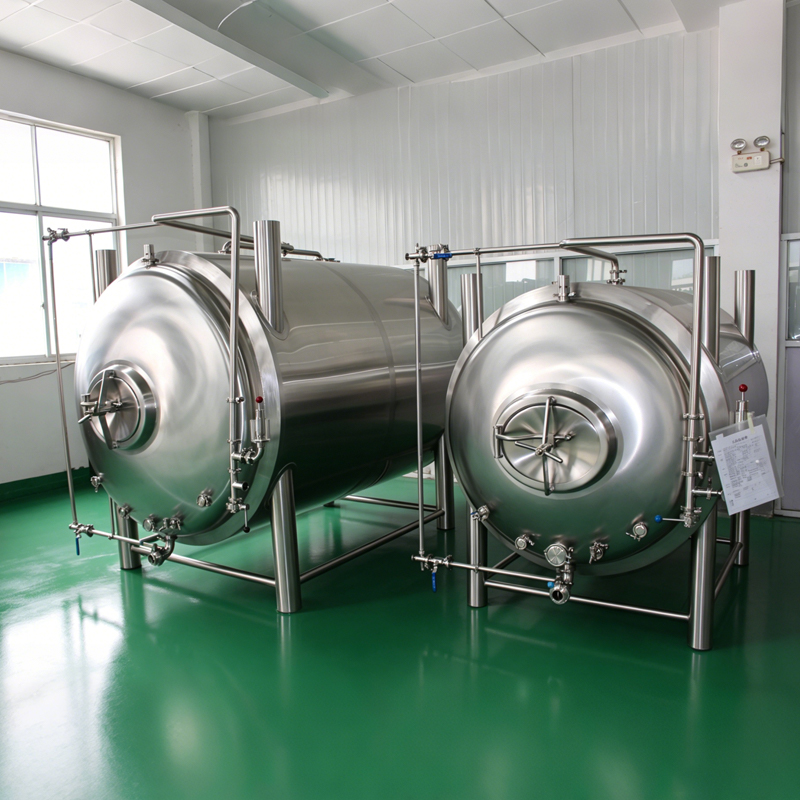
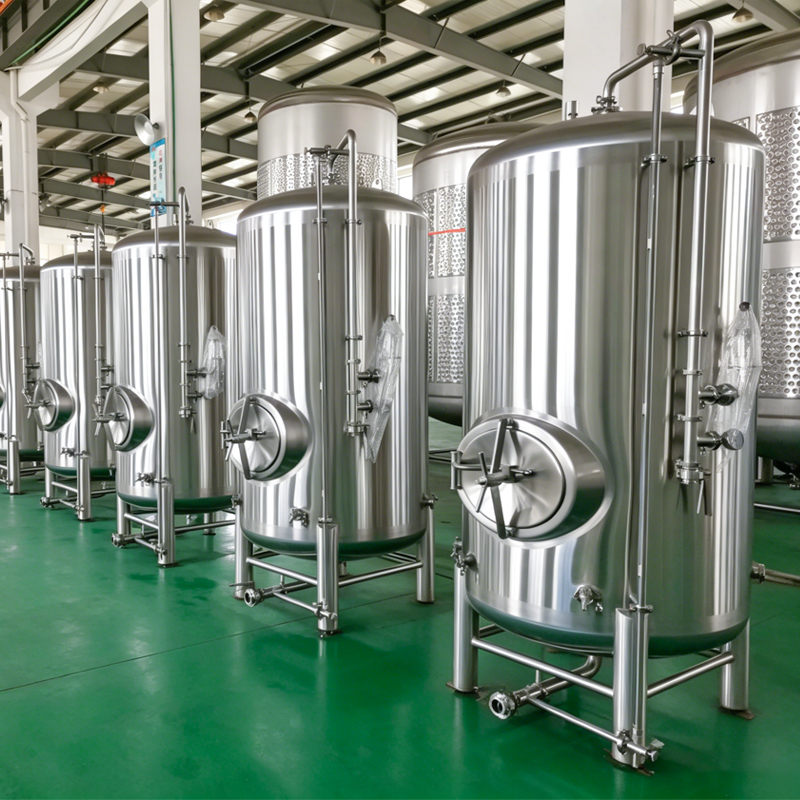
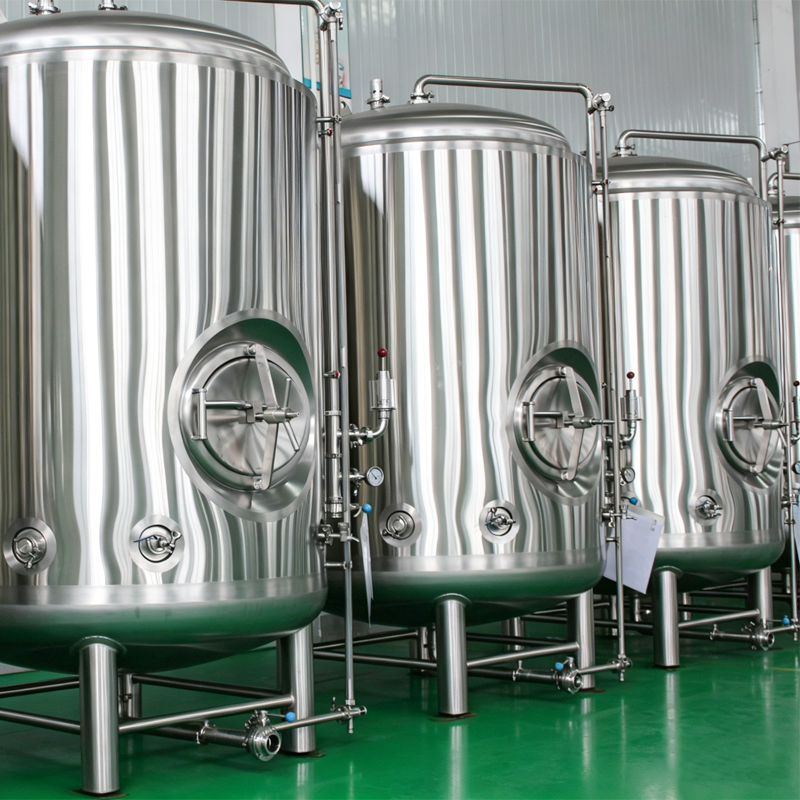
Brite Beer Tanks are pressure-rated finishing tanks used after fermentation to clarify, carbonate, condition, and hold beer before packaging. In practical brewery planning, the tank is not only a storage vessel; it is the final control point for beer brightness, CO2 level, serving stability, and packaging consistency. A well-designed BBT helps brewers keep beer clean, cold, carbonated, and ready for bottling, canning, or kegging.
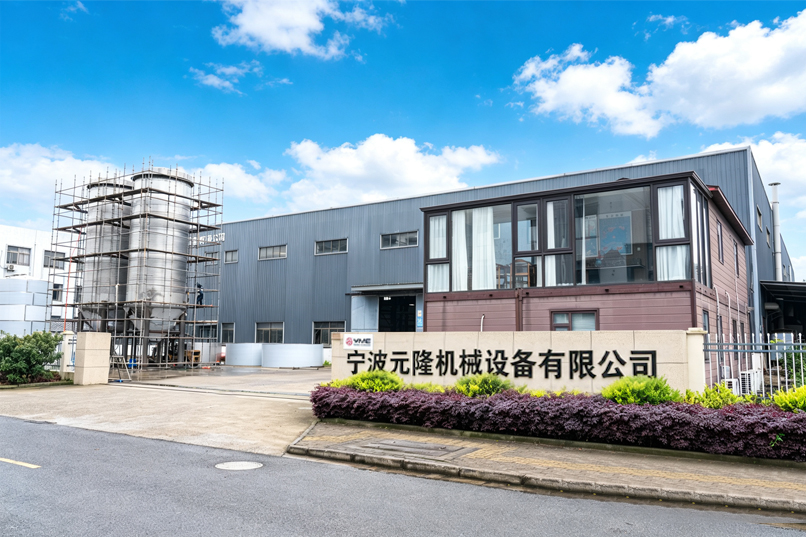
For breweries that need flexible stainless steel cellar equipment, YME Equipment Co., Ltd provides customized brewery solutions backed by more than 20 years of experience in fluid process equipment and brewery equipment manufacturing. Its Brite Beer Tanks are positioned for final conditioning, carbonation, and buffering for beer, sparkling cider, and carbonated beverages.
Why Brite Beer Tanks Matter in the Brewing Process
After fermentation, beer may still contain suspended yeast, haze-forming particles, and uneven CO2 levels. A BBT gives the brewer a controlled space to stabilize the beer before it reaches the package. This is especially important for breweries that need repeatable flavor, stable foam, and a clear appearance across multiple batches.
- It supports final clarification so beer looks bright and polished.
- It allows controlled carbonation before filling kegs, cans, or bottles.
- It works as a buffer tank when packaging speed is different from cellar output.
- It helps reduce oxygen pickup when matched with sanitary valves and closed transfer design.
The working principle is straightforward: finished beer is transferred from a fermenter or conditioning tank into the BBT, where temperature, pressure, carbonation, and cleanliness are controlled. The tank keeps beer under pressure while CO2 is infused through a carbonation stone or maintained through head pressure.
Carbonation control
A sanitary carbonation stone disperses CO2 into fine bubbles, helping the gas dissolve more evenly into the beer. Compared with simple headspace carbonation, this method can be faster and easier to control when breweries need a stable target carbonation level before packaging.
Temperature and pressure stability
Low temperature improves CO2 absorption and helps beer remain stable. A cooling jacket or insulated design can help maintain the required cellar temperature. Pressure fittings, a pressure gauge, and safety components should be selected according to the brewery’s operating requirements.
Key Advantages of Stainless Steel BBT Design
Main design points that affect BBT performance in brewery production
| Design Feature |
Practical Value |
| Sanitary stainless steel structure |
Helps protect beer quality and supports routine cleaning |
| Mirror-polished inner surface |
Reduces residue attachment and supports hygienic beer contact |
| Carbonation stone |
Allows precise CO2 infusion for consistent beer mouthfeel |
| Vertical or horizontal layout |
Fits different cellar heights and floor plans |
YME can provide customized configurations for different project sizes, which is useful when a brewery has limited cellar space, special packaging requirements, or a need to match BBT capacity with existing fermentation tanks.
A practical selection should start from production volume, packaging schedule, and cellar layout. For example, if a brewery fills beer two or three times per week, the BBT should have enough holding capacity to support packaging without forcing the brewer to rush conditioning.
- Match tank volume with batch size and packaging frequency.
- Choose vertical tanks for standard cellar layouts and horizontal tanks when height is limited.
- Confirm whether the tank needs a cooling jacket, insulation, level gauge, CIP spray ball, sampling valve, and carbonation stone.
- Check that sanitary connections are compatible with the brewery’s piping, pumps, and cleaning system.
- Plan access space for cleaning, inspection, valve operation, and safe maintenance.
Common Applications in Breweries and Beverage Plants
Brite Beer Tanks are mainly used for beer, but their role can extend to other carbonated beverages when the process requires sanitary stainless steel storage, pressure holding, and controlled carbonation. Typical applications include craft beer finishing, lager conditioning, final beer buffering, sparkling cider preparation, and pre-packaging storage for carbonated drinks.
For a growing brewery, the BBT often becomes the link between cellar production and packaging efficiency. When the tank is properly sized, the packaging line can run more smoothly, while the brewer keeps better control over final product quality.
FAQ About Brite Beer Tanks
Q1: What is the difference between a fermenter and a Brite Beer Tank?
A fermenter is mainly used for yeast fermentation, while a Brite Beer Tank is mainly used after fermentation for clarification, carbonation, conditioning, and holding beer before packaging.
Q2: Does every brewery need a BBT?
Not every small brewery must use one, but a BBT is highly useful when the brewery wants clearer beer, controlled carbonation, and smoother packaging operations.
Q3: Can Brite Beer Tanks be customized?
Yes. Tank volume, orientation, cooling jacket, insulation, fittings, carbonation system, and sanitary accessories can be adjusted according to brewery layout and process requirements.
Q4: Why is stainless steel commonly used for BBTs?
Stainless steel is strong, cleanable, corrosion-resistant, and suitable for sanitary beer contact. It also supports long-term operation in wet brewery environments.



 English
 русский
 عربى
عربى