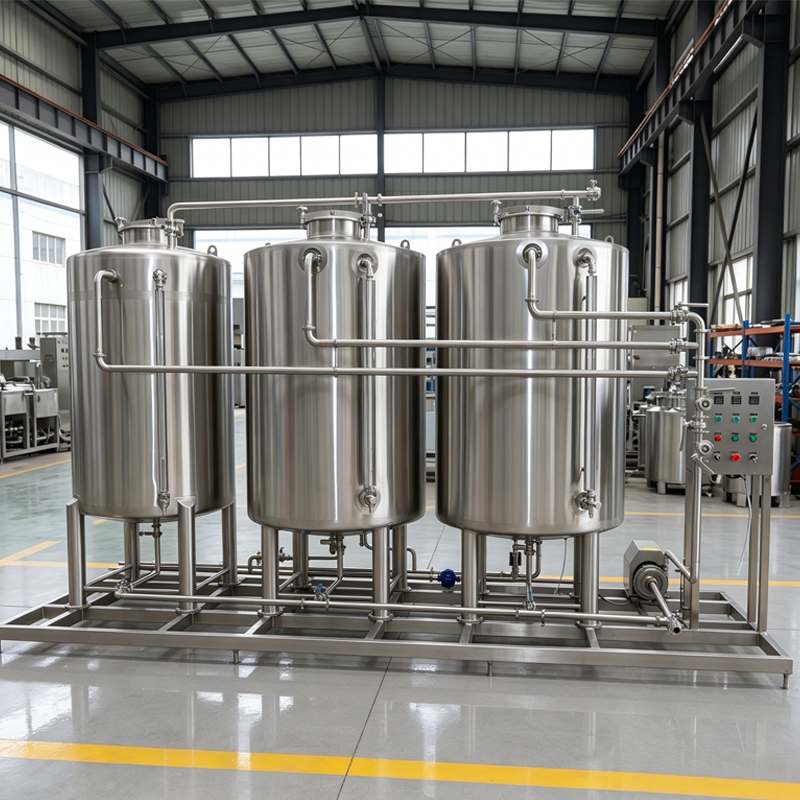
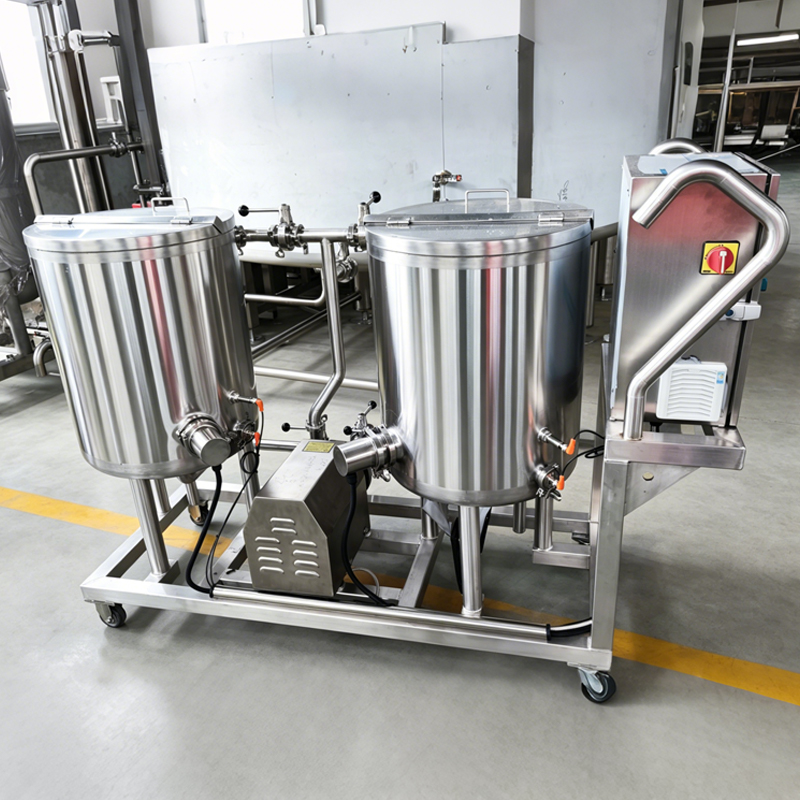
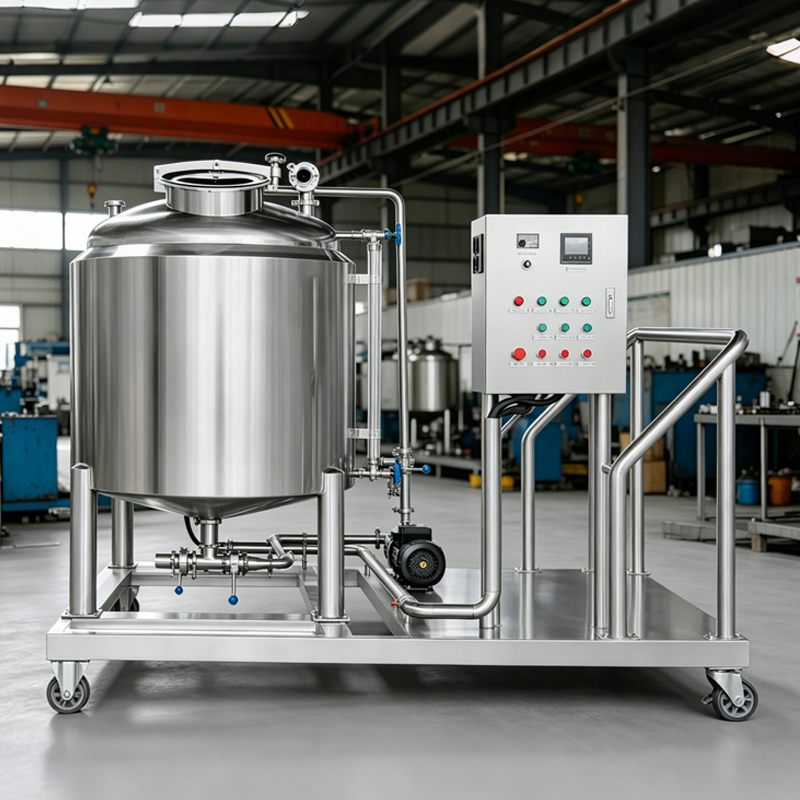
What Is a CIP Cleaning System?
A CIP cleaning system (clean-in-place) is an automated sanitation process that cleans the interior of tanks, pipes, valves, and other process equipment without requiring disassembly. Instead of manually scrubbing a vessel between batches, a CIP system circulates a programmed sequence of water, detergent, and sanitizing solutions through the equipment via spray balls and piping loops. This approach is standard across breweries, dairies, and other food and beverage facilities because it delivers consistent, repeatable sanitation while significantly reducing labor time and equipment downtime between production runs.
Key Advantages of an Automatic CIP System for Food Grade Tanks
- Consistent cleaning results, since the same programmed cycle runs identically every time rather than depending on manual technique
- Reduced labor cost and turnaround time, since tanks do not need to be opened or physically scrubbed between batches
- Lower contamination risk, which protects product quality and supports food safety compliance in sanitary production environments
- Chemical and water savings, since programmed cycles use calibrated volumes rather than the excess often used during manual cleaning
- Data logging capability, allowing facilities to record and document each cleaning cycle for quality assurance and audit purposes
For facilities running multiple product batches per day, the time saved by an automatic CIP system for food grade tanks can be substantial—manual tank cleaning can take significantly longer than an automated cycle covering the same vessel, directly affecting how many batches a facility can realistically process in a working day.
How a CIP Cleaning System Works
An automatic CIP system operates through a repeatable, staged cycle designed to remove residue, sanitize surfaces, and rinse the system clean before the next production run:
Typical stages of a CIP cleaning cycle
| Stage |
Purpose |
| Pre-rinse |
Removes loose residue with water before chemical cleaning begins |
| Caustic wash |
Breaks down organic residue, fats, and proteins on interior surfaces |
| Intermediate rinse |
Clears remaining caustic solution before the acid stage |
| Acid wash |
Removes mineral scale and neutralizes residual caustic film |
| Final rinse and sanitize |
Flushes remaining chemical and applies sanitizer before the next batch |
Spray balls or rotary jet heads mounted inside the tank ensure full surface coverage during each stage, while flow rate and pressure are calibrated to achieve adequate turbulence for effective cleaning without excessive water or chemical use.
Why Automation Matters for Food Grade Tank Sanitation
Manual cleaning introduces variability: cycle time, chemical concentration, and coverage can all differ depending on who performs the task and how thoroughly. An automatic CIP system for food grade tanks removes this variability by running a fixed, validated program every time, which is particularly important in regulated food and beverage production where consistent sanitation directly affects product safety and shelf life. Automated systems also allow multiple tanks to be cleaned in sequence from a central control panel, reducing the operator hours required compared to manually cleaning each vessel individually.
Designing a CIP System for Your Facility
- Map out all tanks, pipes, and valves that require cleaning to determine total CIP circuit length and complexity.
- Select spray ball or rotary jet coverage appropriate to each tank's size and geometry to ensure no dead zones are left uncleaned.
- Size pumps and piping to deliver adequate flow velocity for effective turbulent cleaning throughout the circuit.
- Choose single-use or recovery-tank CIP design based on chemical cost priorities and cleaning frequency.
- Integrate temperature and conductivity sensors so the system can confirm each cycle meets validated cleaning parameters automatically.
About YME Equipment Co., Ltd
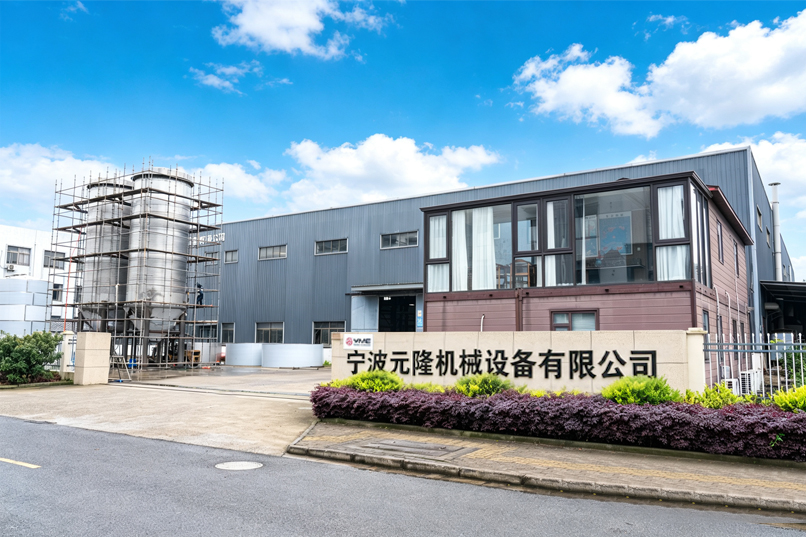
YME Equipment Co., Ltd is a China-based OEM/ODM fluid process equipment manufacturer and brewery equipment supplier with over 20 years of experience, providing comprehensive brewery solutions from brewhouse and fermentation systems to CIP cleaning systems and full water treatment. YME's designers, engineers, and production staff continuously undergo advanced training to stay at the forefront of sanitation and process technology, allowing the company to deliver automatic CIP systems tailored to tanks and piping layouts of any size and complexity. YME's stainless steel equipment has been exported to Europe, North America, Australia, and Asia, supported by long-term partnerships built on consistent quality and reliable technical support.
Frequently Asked Questions
Q1: How often should a CIP cleaning system run?
Most food and beverage facilities run a full CIP cycle after every production batch, with additional intermediate rinses scheduled depending on product type and regulatory requirements.
Q2: What is the difference between single-use and recovery CIP systems?
A single-use system discharges cleaning solution after each cycle, while a recovery system stores and reuses caustic or acid solutions across multiple cycles, reducing chemical consumption over time.
Q3: Can an automatic CIP system for food grade tanks clean multiple tanks at once?
Yes, many automated systems are designed to clean several tanks in sequence or in parallel from a central control panel, depending on pump capacity and piping design.
Q4: How do you know a CIP cycle has fully cleaned a tank?
Validated CIP systems monitor parameters such as flow rate, temperature, time, and chemical concentration throughout the cycle, with data logging used to confirm and document that each cleaning cycle met required specifications.



 English
 русский
 عربى
عربى