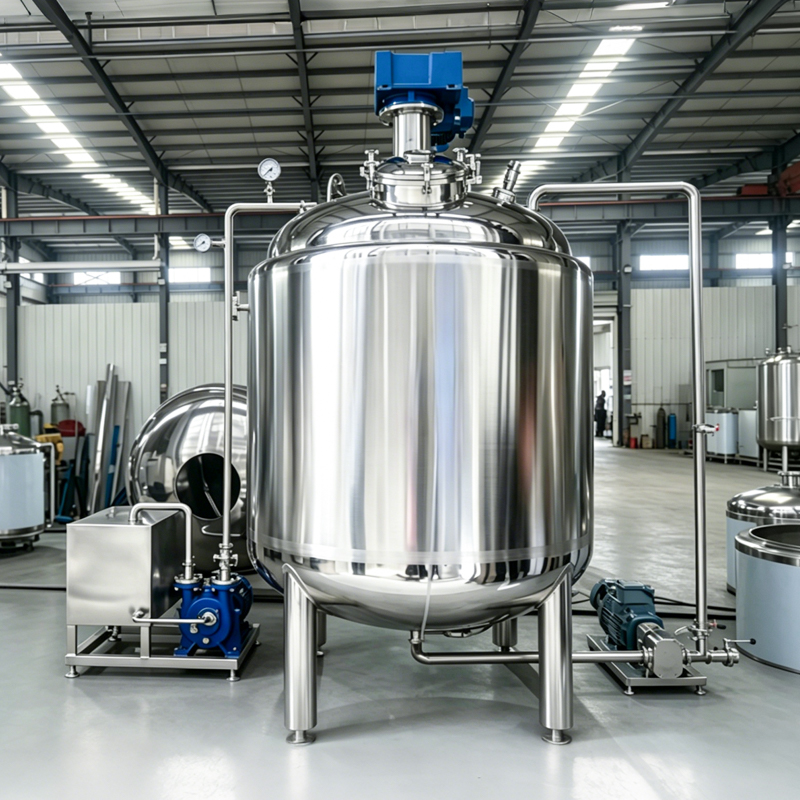
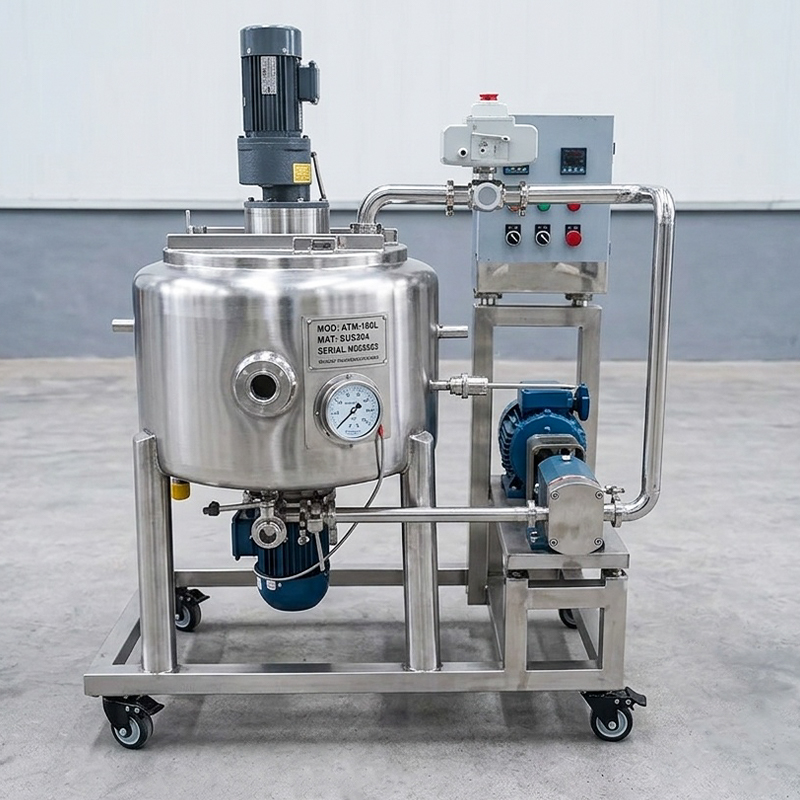
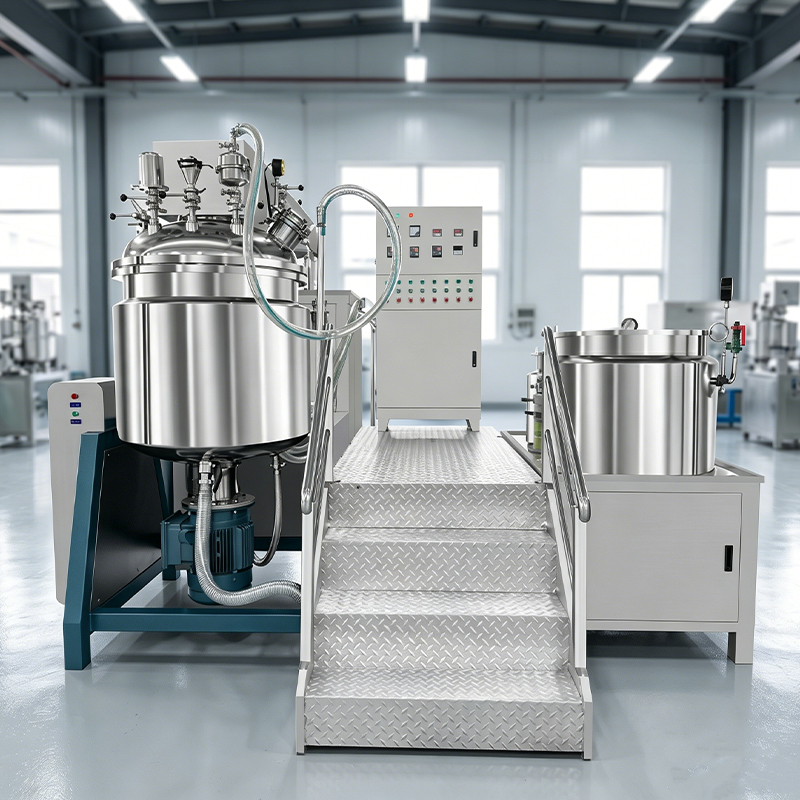
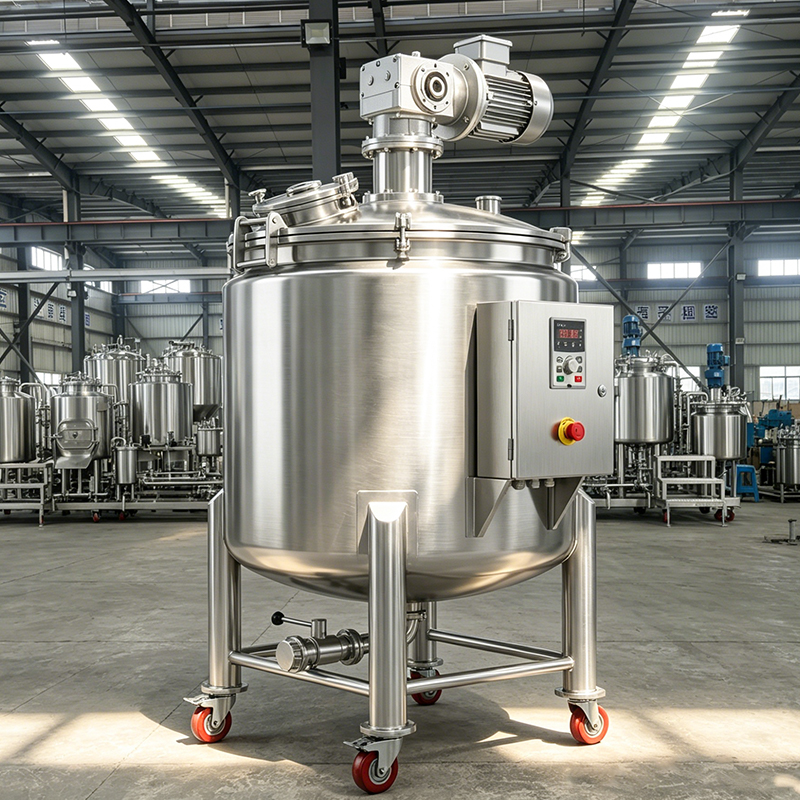
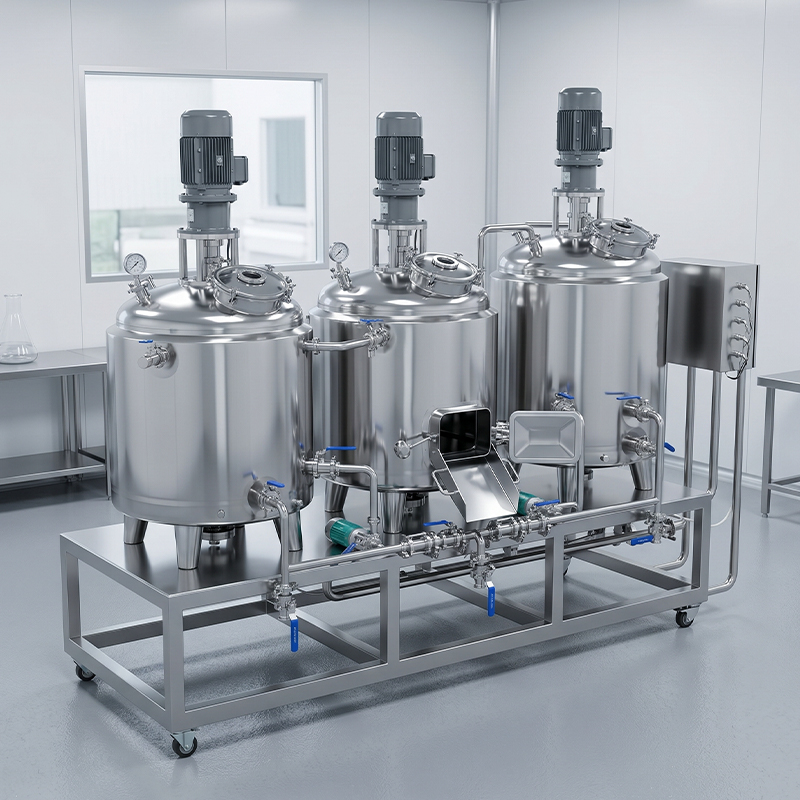
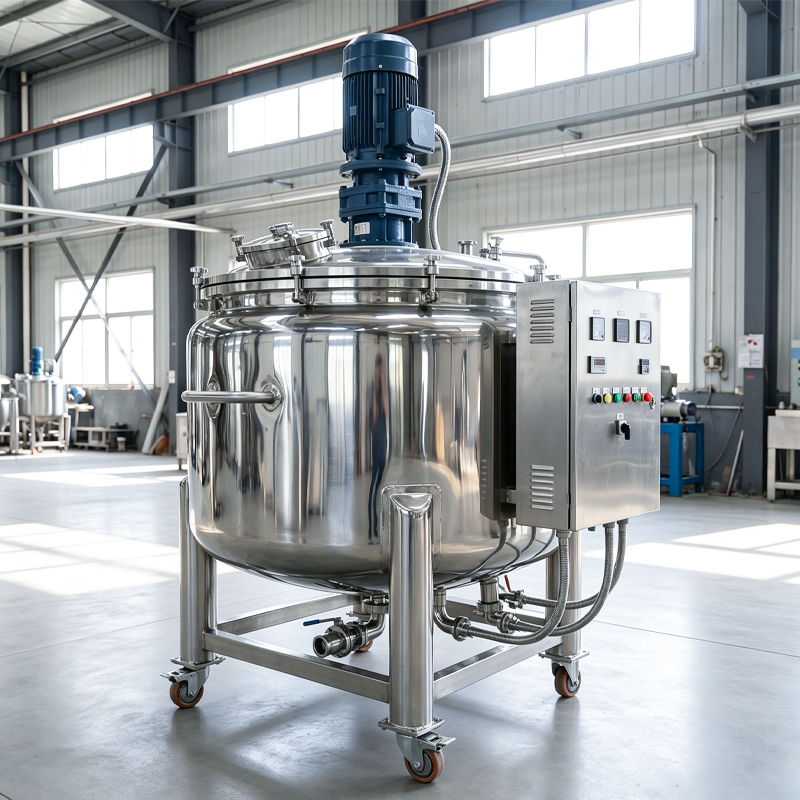
What Is an Industrial Stainless Steel Mixing Tank?
A mixing tank is a vessel designed to blend liquids, powders, or a combination of both into a uniform batch through mechanical agitation. An industrial stainless steel mixing tank specifically uses food-grade or pharmaceutical-grade stainless steel—typically 304 or 316 grade—for the wetted surfaces, since these alloys resist corrosion, tolerate repeated cleaning cycles, and do not react with the product being mixed. Mixing tanks are used across food and beverage production, dairy processing, cosmetics, chemicals, and pharmaceuticals wherever a batch of material needs to reach a consistent composition before the next stage of production.
Key Advantages of a Stainless Steel Mixing Tank
- Corrosion resistance that extends service life even with acidic, alkaline, or high-salt formulations
- Smooth, non-porous interior surfaces that simplify sanitation and reduce microbial risk
- Compatibility with CIP (clean-in-place) systems, cutting manual cleaning labor and downtime between batches
- Structural strength that supports heating jackets, cooling jackets, and vacuum or pressure operation
- Long-term cost efficiency, since stainless steel tanks generally outlast plastic or mild-steel alternatives under continuous industrial use
For manufacturers running multiple product lines through the same equipment, the non-reactive surface of a stainless steel mixing tank is particularly important, since it prevents flavor or fragrance carryover between batches—something porous or coated tank materials cannot guarantee over time.
How a Mixing Tank Works
The core working principle of a mixing tank is straightforward: a motor-driven agitator rotates inside the vessel, creating flow patterns that carry material from the tank walls toward the center and back again until the batch reaches uniform concentration, temperature, and texture. The agitator type is selected based on the viscosity and behavior of the material being processed:
Common agitator types used in industrial stainless steel mixing tanks
| Agitator Type |
Best Suited For |
| Paddle / anchor |
Medium to high-viscosity liquids, wall-scraping applications |
| Turbine / impeller |
Low-viscosity liquids requiring fast, uniform blending |
| High-shear disperser |
Dissolving powders, breaking up clumps, emulsifying |
| Magnetic mixer |
Sealed, sterile, or hazardous-material applications |
Beyond the agitator, the tank bottom shape—conical, sloped, or dish-shaped—affects how completely the batch drains and how easily solids are kept in suspension, which is why bottom design is chosen alongside the agitator rather than as an afterthought.
Choosing the Right Mixing Tank for Your Process
- Confirm the batch volume needed per cycle and select a working capacity with adequate headspace, typically around 20-25% above the fill volume.
- Match the stainless steel grade to the product: 304 for general food and beverage use, 316L for higher corrosion resistance in pharmaceutical or high-salt applications.
- Decide whether heating or cooling jackets are required based on the process temperature profile.
- Select an agitator type and motor sizing appropriate to the product viscosity and mixing speed target.
- Specify sanitary fittings, level sensors, and CIP compatibility if the tank will be integrated into an automated production line.
Mixing Tanks Across Industries
While mixing tanks are closely associated with food and beverage production, the same core vessel design supports several adjacent industries. In brewery and beverage operations, mixing tanks are used for syrup preparation and ingredient blending ahead of fermentation. In dairy processing, mixing tanks prepare standardized milk blends before pasteurization. In cosmetics and personal care, mixing tanks with high-shear agitators handle emulsification of creams and lotions. Because the underlying stainless steel fabrication, welding, and CIP principles carry across these applications, manufacturers experienced in one sanitary processing sector can often adapt tank designs to a related industry with only moderate modification.
About YME Equipment Co., Ltd
YME Equipment Co., Ltd is a China-based OEM/ODM fluid process equipment manufacturer and brewery equipment supplier with over 20 years of experience, offering comprehensive stainless steel solutions from mixing and holding tanks to full brewhouse, fermentation, and CIP systems. The company's designers, engineers, and production staff undergo continuous training to keep pace with industry trends, allowing YME to adapt its industrial stainless steel mixing tank designs to projects of varying size and complexity. YME's products have been exported to Europe, North America, Australia, and Asia, supported by long-term partnerships built on consistent equipment quality and reliable after-sales support.
Frequently Asked Questions
Q1: What is the difference between a mixing tank and a storage tank?
A mixing tank includes an agitator and is designed to actively blend contents, while a storage tank simply holds material without built-in agitation.
Q2: What stainless steel grade is best for a mixing tank?
304 stainless steel suits most general food and beverage applications, while 316L is recommended for products with higher acidity, salt content, or pharmaceutical-grade requirements.
Q3: Can a mixing tank include heating and cooling functions?
Yes, most industrial stainless steel mixing tanks can be fitted with a jacketed shell to circulate hot water, steam, or coolant around the vessel for precise temperature control during mixing.
Q4: How is a mixing tank cleaned between batches?
Most industrial mixing tanks use a CIP (clean-in-place) system with rotating spray balls, allowing the interior to be rinsed, washed, and sanitized without disassembling the tank.



 English
 русский
 عربى
عربى